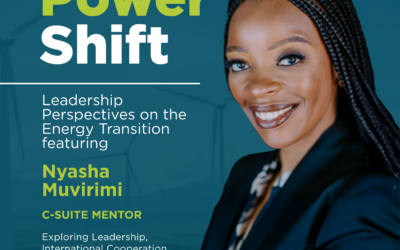
Why is the inclusion of women essential to building a sustainable, resilient and inclusive energy future?
The energy sector is undergoing a profound transformation, and the problems it must solve are grid resilience, the just energy transition, technology adoption, and community trust. All these are too complex for a single perspective to solve alone. Women bring different lived experience, risk sensitivity and problem-solving approaches to engineering and planning decisions, which strengthens outcomes rather than merely adding representation. An energy future built without women’s full participation is also one that overlooks half the workforce and half the consumer base, which is not just an equity gap but a resilience gap. Inclusive teams design more robust systems, anticipate a wider range of failure modes, and better serve diverse communities. Sustainability, in the fullest sense, requires drawing on the full pool of talent and insight available, and that means ensuring women are present, heard and empowered at every level of the value chain.
From your perspective, what progress have you seen in advancing women’s participation and leadership within the energy sector over recent years?
There has been real, measurable progress, and I can point to it through my own path as much as through broader trends. I have been part of the AMEU Women in Electricity mentorship programme since it started in 2015, and it took me from a first technical paper presentation in 2017 to serving as Chairperson of the platform and, from there into international exposure in a 2023 GWNET mentorship with an international mentor in energy finance and attendance at the Berlin Energy Dialogue and Women Energised Women forum that same year. Programmes like the AWEAP JET Skills Programme through Wits, which I completed in 2024, are now actively building the next layer of energy leaders, and I have since built on that foundation to complete a Master’s in Energy Leadership. Furthermore, more women are also moving into statutory and operational leadership appointments, not just advisory roles, and structured pipelines, including the C-Suite programme I am currently part of through GIZ SAGEN-CET and DEE, which shows that institutions are investing deliberately in the next generation. Representation still thins out at senior levels, but the pipeline is visibly working.
Can you share an example of an initiative or intervention that has successfully supported women in energy and created meaningful impact?
I can speak to this from direct experience, because these programmes shaped my own career. I have been part of the AMEU Women in Electricity mentorship programme since its inception in 2015, and it gave me leadership and public speaking skills that carried me into my first technical paper presentation at a conference in 2017. In 2023, I was a GWNET mentee paired with an international mentor from the energy sector who specialised in finance, a pairing that broadened both my global network and my understanding of the sector beyond pure engineering. That same year, as Chairperson of Women in Electricity, the programmeopened the door for me to attend the Berlin Energy Dialogue and the Women Energised Women forum in Berlin. I later completed the AWEAP JET Skills Programme for Utility Professionals through Wits University in 2024, which sparked my interest in energy leadership and became the foundation for the Master of Management in Energy Leadership I have just graduated with this July. Taken together, these programmes have not just supported my technical growth; they have built the leader I am today.
How can organisations create environments where women are empowered to thrive, lead and contribute meaningfully across the energy value chain?
Organisations need to move beyond entry-level recruitment targets and focus on retention and progression, ensuring women have access to technical assignments, statutory appointments, and leadership pipelines, not just junior roles. This means deliberate mentorship and sponsorship, transparent promotion criteria, and workplace cultures where women’s technical judgement is trusted on the same footing as their male peers’. Flexible and safe working conditions matter too, particularly for site-based and operational roles. Partnering with professional bodies and platforms like AMEU-WIE, AWEaP, SAIEE and GWNET gives organisations structured ways to support development beyond what they can offer internally. My own growth through exactly these programmes is proof of what deliberate investment can produce. Ultimately, empowerment across the value chain requires organisations to treat inclusion as an operational and technical priority, not a side initiative embedded in how projects are staffed, how leadership is developed, and how success is measured.
What opportunities do you see for women to play a greater role in shaping South Africa’s energy transition?
South Africa’s energy transition is opening up entirely new terrain: renewable integration, grid modernisation, energy storage, and evolving regulatory and municipal frameworks, and none of it comes with entrenched incumbents the way legacy generation and transmission did. That makes it fertile ground for women to move into shaping roles early, from technical design through to policy and planning, rather than having to break into structures already set. There is also growing space in areas such as just transition research, where women can build deep specialist expertise and statutory standing. I see this trend playing out in my own trajectory: my current C-Suite women in energy empowerment programme with DEE and GIZ’s SAGEN-CET programme includes a study tour to Munich and Berlin in September, precisely the kind of international exposure that equips women to bring global thinking into local transition planning. The transition needs people who can bridge technical rigour with social and community considerations, a combination where women’s participation can be genuinely decisive, not incidental.