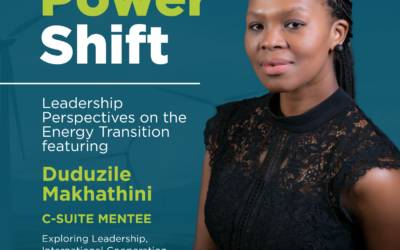
Why is the inclusion of women essential to building a sustainable, resilient and inclusive energy future?
A just energy transition requires more than technological progress. It requires institutions that are capable of making decisions that reflect the realities of the societies they serve.
Women’s participation strengthens those institutions. When women contribute to policy development, programme design and strategic decision-making, energy initiatives become better equipped to respond to complex social and economic realities.
This is particularly important in South Africa, where the Just Energy Transition must address historical inequalities while creating new opportunities for future generations. Advancing women’s leadership is therefore not only aligned with global commitments such as the Sustainable Development Goals and the African Union’s Agenda 2063. It is fundamental to building an energy transition that delivers lasting public value.
From your perspective, what progress have you seen in advancing women’s participation and leadership within the energy sector over recent years?
One of the most encouraging developments has been the growing investment in leadership itself. Across the sector, more initiatives are creating opportunities for women to build technical expertise, strengthen leadership capabilities and gain exposure to decision-making environments that were previously less accessible.
Programmes that combine mentorship, professional exchange, executive development and practical project experience are helping women take on greater responsibility across energy institutions. While barriers remain, these sustained investments are beginning to strengthen the leadership pipeline in ways that can deliver long-term institutional change.
Can you share an example of an initiative that has successfully supported women in energy and created meaningful impact?
The C-Suite Women in Energy Programme stands out as an example of what becomes possible when leadership development is approached holistically. The programme brought together senior women from across South Africa’s energy sector and created opportunities that extended far beyond traditional training. Participants engaged in executive leadership development, academic learning, mentorship, media training, peer exchange and international study visits, allowing them to expand both their expertise and their professional networks.
What makes this initiative particularly significant is that it invests in leaders who are already influencing organisations and public institutions. By strengthening their confidence, visibility and strategic leadership, the programme contributes to broader change across the sector rather than benefiting individuals alone.
How can organisations create environments where women are empowered to thrive, lead and contribute meaningfully across the energy value chain?
Creating lasting change requires organisations to embed inclusion into the way they operate. That begins with creating opportunities for women to access leadership networks, mentorship and visible role models. These connections help build confidence, expand professional influence and create pathways for career progression.
Equally important is integrating gender considerations throughout the entire project cycle. From early planning and implementation to monitoring and evaluation, organisations should use gender analysis, clear action plans and measurable indicators to ensure inclusion becomes part of everyday decision-making.
Beyond organisational practice, supportive legal and regulatory frameworks also play an essential role. Lasting progress depends on creating an environment where women’s interests and contributions are recognised consistently across every aspect of the Just Energy Transition.
What opportunities do you see for women to play a greater role in shaping South Africa’s energy transition?
South Africa’s evolving energy landscape presents opportunities that extend well beyond traditional power generation. Emerging industries such as green hydrogen, power-to-X technologies and energy efficiency are creating new spaces where women can shape policy, drive innovation, lead research, manage projects, mobilise investment and strengthen community engagement.
The next priority is ensuring that women have sustained access to these opportunities through stronger leadership pathways, regional collaboration and greater visibility across the sector.
When we invest in women’s leadership today, we strengthen the institutions that will guide the energy transition tomorrow. That is how we build a transition that is not only technically successful, but also durable, inclusive and capable of delivering long-term impact.