Why is the inclusion of women essential to building a sustainable, resilient and inclusive energy future?
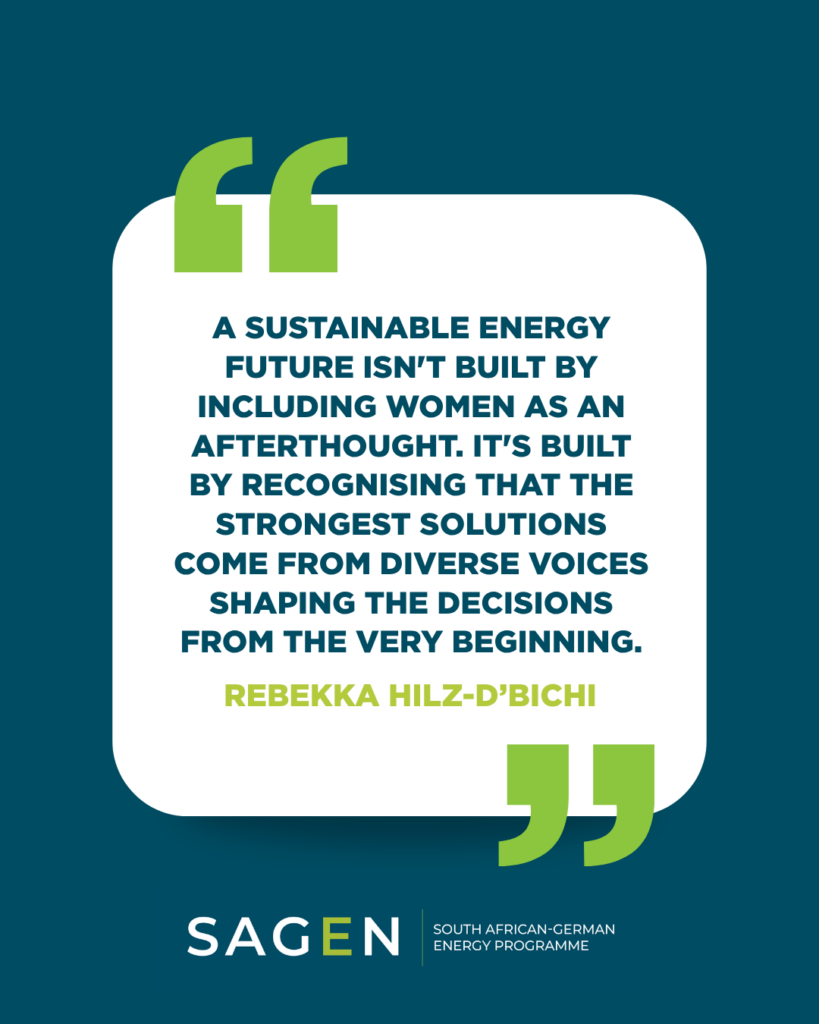
A sustainable energy future isn’t built by including women as an afterthought. It’s built by recognising that the strongest solutions come from diverse voices shaping decisions from the very beginning.
Women represent half of the population, but the case for inclusion goes far beyond representation. Women experience energy differently, whether through household energy use, access to reliable services or safety considerations such as street lighting. Those realities should inform how energy systems are designed, financed and implemented.
At the same time, women are essential contributors as policymakers, entrepreneurs, engineers, business leaders and innovators. The energy transition demands bold thinking and collaborative leadership, and organisations that embrace diversity are better positioned to develop the practical, forward-looking solutions needed to transform both the energy and industrial sectors.
From your perspective, what progress have you seen in advancing women’s participation and leadership within the energy sector over recent years?
Over the past decade, I’ve seen a meaningful shift in how gender is discussed within the energy sector.
The conversation has moved beyond good intentions and is increasingly supported by evidence. Research from organisations such as the International Renewable Energy Agency (IRENA) and the International Energy Agency (IEA) has strengthened the business and policy case for women’s participation across the energy value chain.
There’s also greater visibility of women’s leadership. While women remain underrepresented in senior technical and policy positions, organisations are paying closer attention to representation, measuring progress more consistently and creating dedicated opportunities for women to grow.
I’ve also witnessed the expansion of powerful networks such as Women Energize Women and Women in Green Hydrogen. These initiatives demonstrate that mentorship, peer learning and meaningful professional connections can accelerate both individual careers and broader sector change.
Can you share an example of an initiative that has successfully supported women in energy and created meaningful impact?
One of the most rewarding experiences early in my career at GIZ was implementing a mentoring programme for women in the energy sector.
The programme brought together ten emerging professionals, and today five of those women have advanced into senior leadership roles. They now serve as vice presidents of international energy companies, deputy director generals in energy ministries, communications executives and spokespersons for regional organisations.
Their success isn’t simply reflected in their job titles. They’ve introduced new ideas, improved organisational processes and influenced decision-making within their institutions.
What stands out most to me, however, is that the programme created something far more enduring than a single intervention. It built a community. Professional relationships evolved into trusted networks and, in many cases, lifelong friendships that continue to strengthen women’s leadership long after the formal mentorship ended.
How can organisations create environments where women are empowered to thrive, lead and contribute meaningfully across the energy value chain?
Unlocking women’s full potential requires organisations to create the conditions where talent can flourish.
This isn’t an energy-sector challenge alone. It’s a leadership challenge across every industry.
That starts with intentional policies that promote diverse teams, equitable leadership opportunities and transparent career progression. It also means recognising that flexibility matters. Many women continue to balance significant responsibilities beyond the workplace, and organisations that support flexible ways of working are often better equipped to retain and develop experienced professionals.
Equally important is creating spaces where women can build networks, access mentors and expand their professional influence. Careers are shaped not only by technical expertise, but also by relationships, visibility and opportunities to lead.
When these conditions become part of organisational culture rather than isolated initiatives, inclusion becomes a driver of performance instead of a standalone objective.
What opportunities do you see for women to play a greater role in shaping South Africa’s energy transition?
South Africa’s energy transition is creating entirely new industries alongside the transformation of existing ones, and that makes this a defining moment for women’s leadership.
Renewable energy, green hydrogen, battery technologies and the evolving electric mobility ecosystem all present opportunities to increase women’s participation across technical, commercial and strategic roles.
Progress has been strongest in awareness, networking and mainstreaming gender considerations, but representation in senior decision-making remains slower than it should be. Closing that gap will require continued investment in leadership pipelines, access to finance, specialised training and accountability mechanisms that ensure inclusion translates into measurable outcomes.
At GIZ South Africa, we’re proud to contribute through mentorship programmes, practical guidance for organisations, specialised training and advisory support that help create stronger pathways for women across the energy sector.
The transition ahead isn’t only about changing how energy is produced. It’s an opportunity to redefine who shapes the decisions that will power our future.