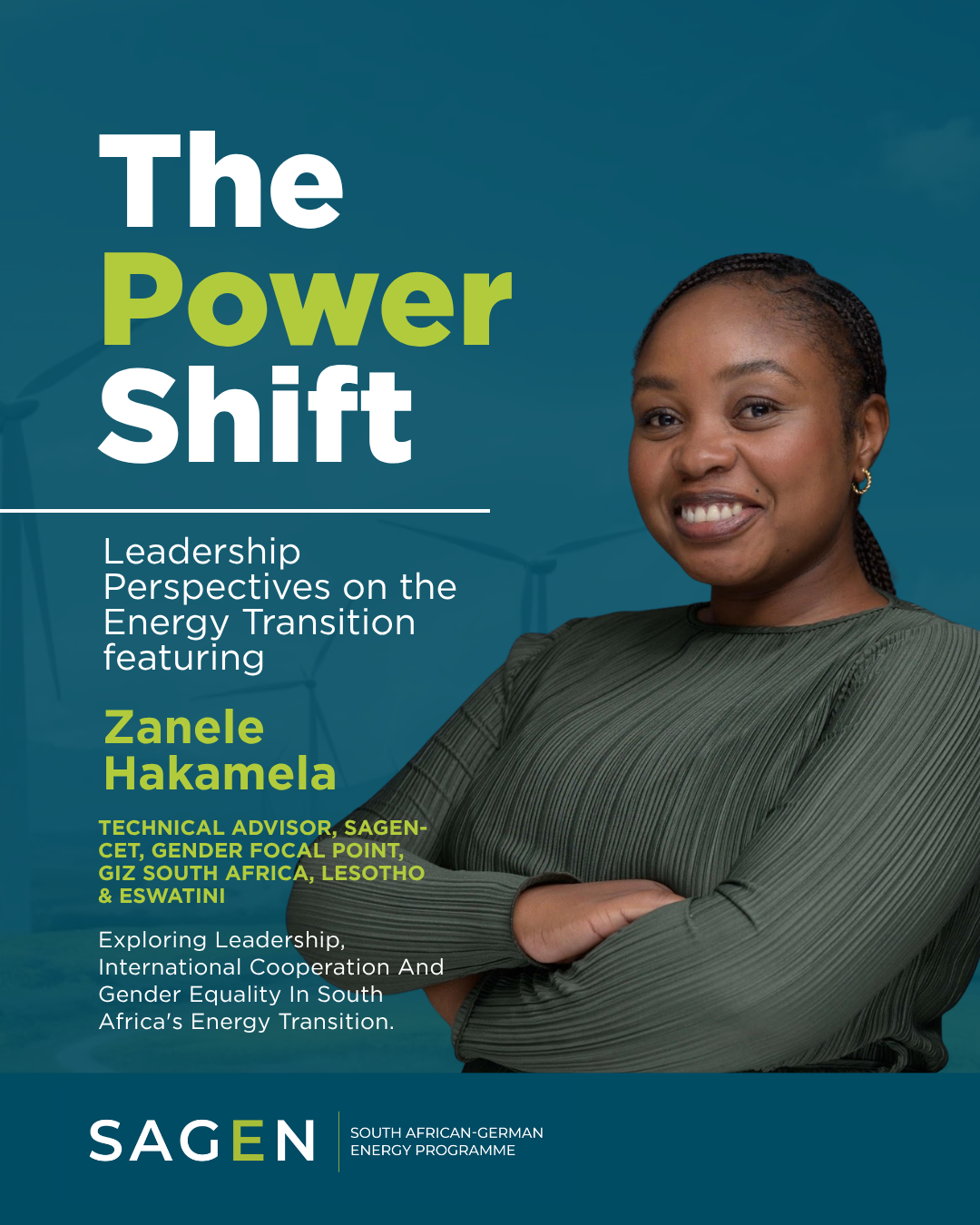
Why is the inclusion of women essential to building a sustainable, resilient and inclusive energy future?
For me, the energy transition is about much more than introducing new technologies or increasing renewable energy generation. It’s about ensuring the transition is fair and that everyone has the opportunity to contribute to and benefit from it.
Women make up half of the population, yet we remain underrepresented across many areas of the energy sector, particularly in technical and leadership roles.
When women are included in decision-making, we bring different perspectives, experiences and approaches to solving complex challenges. Those diverse viewpoints lead to more innovative solutions and stronger outcomes because they reflect the needs of a wider range of people. Our communities are incredibly diverse, so the people designing energy policies and programmes should reflect that diversity too.
There’s also a compelling economic case. South Africa is facing significant energy challenges, and we simply cannot afford to overlook the skills, talent and leadership that women bring. If we want a resilient and sustainable energy future, we need everyone at the table.
From your perspective, what progress have you seen in advancing women’s participation and leadership within the energy sector over recent years?
I’ve seen encouraging progress over the past few years.
When I first entered the sector, conversations about gender often happened on the sidelines or were treated as separate from the industry’s core work. Today, many more organisations recognise that gender equality is directly linked to stronger institutions, better decision-making and a more sustainable energy transition.
More women are stepping into leadership positions, speaking at conferences, shaping policy discussions and leading technical projects. Development partners, government departments and private sector organisations are investing more in mentorship, leadership development and platforms that allow women to share their expertise and experiences.
There’s still work to do. Women remain underrepresented in engineering, technical operations and executive leadership, and many continue to face barriers to career progression. Compared to a few years ago, however, there’s greater awareness and a stronger commitment across the sector to drive meaningful change rather than simply meeting targets.
Can you share an example of an initiative that has successfully supported women in energy and created meaningful impact?
One initiative that stands out is our work with the City of Cape Town to integrate gender considerations into the city’s energy-related data and planning processes.
Through this partnership, we’ve supported the development of gender-responsive indicators that help the city better understand how different groups experience and access energy services.
Traditionally, energy planning has focused on technical and economic data, but it hasn’t always captured the different realities of women and men. By incorporating gender-disaggregated data into municipal planning, the city is better positioned to make evidence-based decisions that are more inclusive and responsive to the needs of all residents.
What I appreciate most about this initiative is that it moves beyond simply talking about gender equality. It embeds inclusion into the way decisions are made, making it part of everyday planning rather than an afterthought.
While this work continues to evolve, it demonstrates how data can become a powerful tool for advancing gender equality and strengthening energy governance. It also has the potential to serve as a model for other municipalities looking to build a more inclusive energy transition.
How can organisations create environments where women are empowered to thrive, lead and contribute meaningfully across the energy value chain?
Creating an inclusive workplace starts with leadership. Organisations need leaders who genuinely believe that diversity strengthens organisations and who actively create opportunities for women to grow and succeed.
Recruitment is important, but inclusion doesn’t end once someone is hired. Organisations should ensure women have equal access to technical training, leadership development, mentorship and opportunities to work on high-impact projects. Transparent recruitment and promotion processes also make a meaningful difference.
Workplace culture matters just as much.
Women need to feel that their voices are heard, their ideas are valued and that they can contribute without constantly having to prove themselves. Often, it’s the everyday experiences, being included in important meetings, being trusted with leadership responsibilities and having supportive managers, that determine whether someone stays and grows within an organisation.
Gender equality shouldn’t be treated as a compliance exercise. It should be woven into organisational strategy, planning and decision-making because inclusion strengthens organisations as a whole.
What opportunities do you see for women to play a greater role in shaping South Africa’s energy transition?
South Africa’s energy transition presents one of the greatest opportunities we’ve had to reshape the sector.
As we invest in renewable energy, green hydrogen, battery storage, electricity market reform and digital technologies, we also have the opportunity to rethink who participates in the sector and how opportunities are created.
Women have an important role to play across the entire energy value chain as engineers, project developers, researchers, policymakers, entrepreneurs, financiers and community leaders. I also see enormous potential for women-owned businesses to participate more actively in renewable energy supply chains, service delivery and innovation.
At the same time, we need to invest in the next generation. Encouraging more girls and young women to pursue STEM careers, providing mentorship and creating clear pathways into the sector will be essential if we want lasting change.
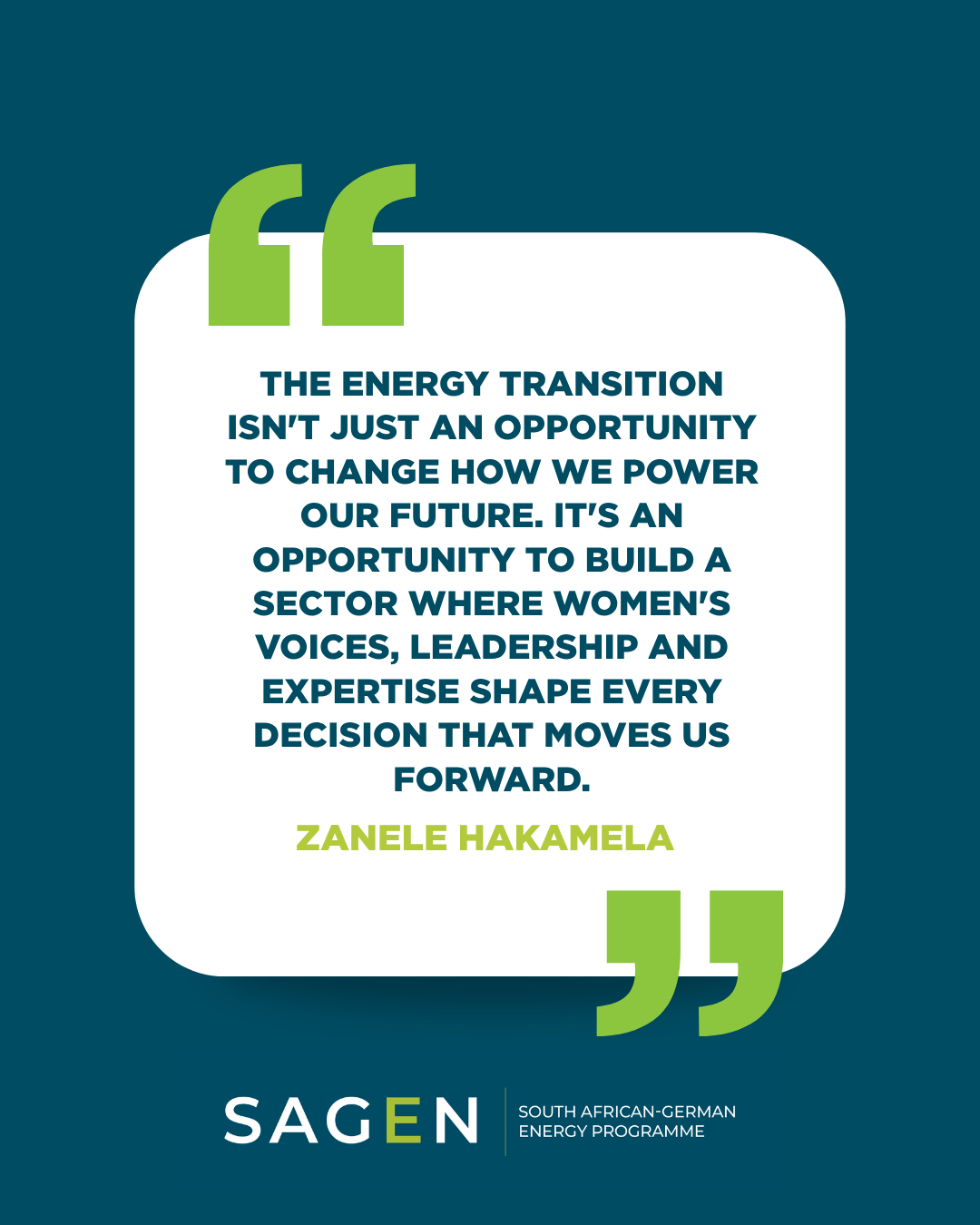
For me, the energy transition isn’t just about changing how we produce electricity. It’s an opportunity to build a sector that is more representative, more innovative and more inclusive than the one we’ve inherited.
If we intentionally create space for women today, they won’t just participate in South Africa’s energy future. They’ll help shape and lead it.